
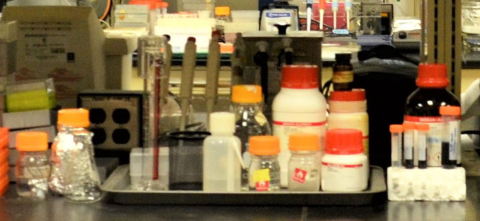
Research Team Receives $769K Grant to Develop Rapid Test for Pathogens
A Michigan State University-led research team has received a $769,000 grant from the U.S. Department of Agriculture’s National Institute of Food and Agriculture to develop a rapid biosensor test for foodborne pathogens.
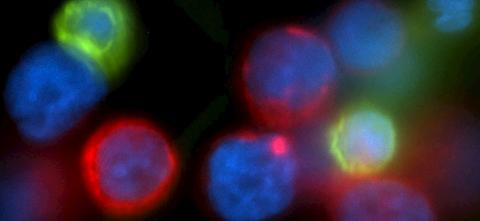
Working to Stop the Spread of Breast Cancer
Spartans are unveiling and studying chemical clues that could lead to better diagnoses and treatments for a metastatic form of breast cancer with support from a $2 million NIH grant.
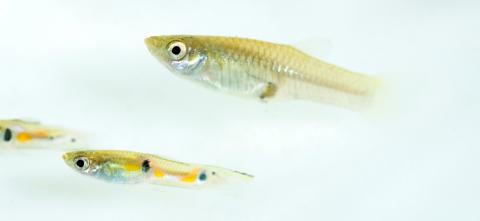
What Guppy Guts Can Teach Us About Evolution
On the list of scientific tools that help us understand health, evolution or the environment, the Trinidadian guppy doesn't often come to mind. Michigan State researchers reveal how these guppies can help understand the gut microbiome as organisms evolve.

Campus Convening on Climate Change Opens Doors for New Ideas, Collaboration and Impact
In one of the first major implementation events of the MSU Strategic Plan 2030, more than 160 faculty, staff and students came together on April 20 for the Campus Convening on Climate Change: Our Planet, Our Food, Our People, to share ideas for the development of a comprehensive research agenda around climate change mitigation and adaptation.

Examining the Role of Microbes in Climate Change
The American Society for Microbiology has issued a new report, “Microbes and Climate Change: Science, People, and Impacts,” examining the relationship between microbes and climate change.

PET scanner arrives at Doug Meijer Medical Innovation Center
Michigan's first total body PET/CT scanner arrived on May 9 at the Michigan State University Radiopharmacy in the Doug Meijer Medical Innovation Building.
Crandall receives $1.9 million NIH grant to study brain behavior
The National Institutes of Health awarded Shane Crandall a five-year, $1.9 million grant to study how neocortical feedback projections influence sensory processing in the brain.
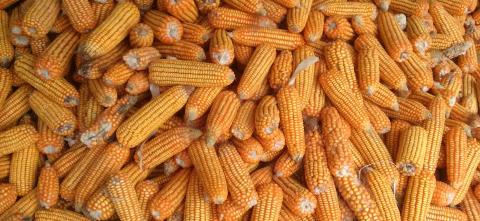
Will Climate Change Increase the Risk of Aflatoxin in U.S. Corn?
As climate change continues to alter weather patterns around the planet including the Midwest, researchers at Michigan State University are modeling the impact on crops such as corn.
Announcements