
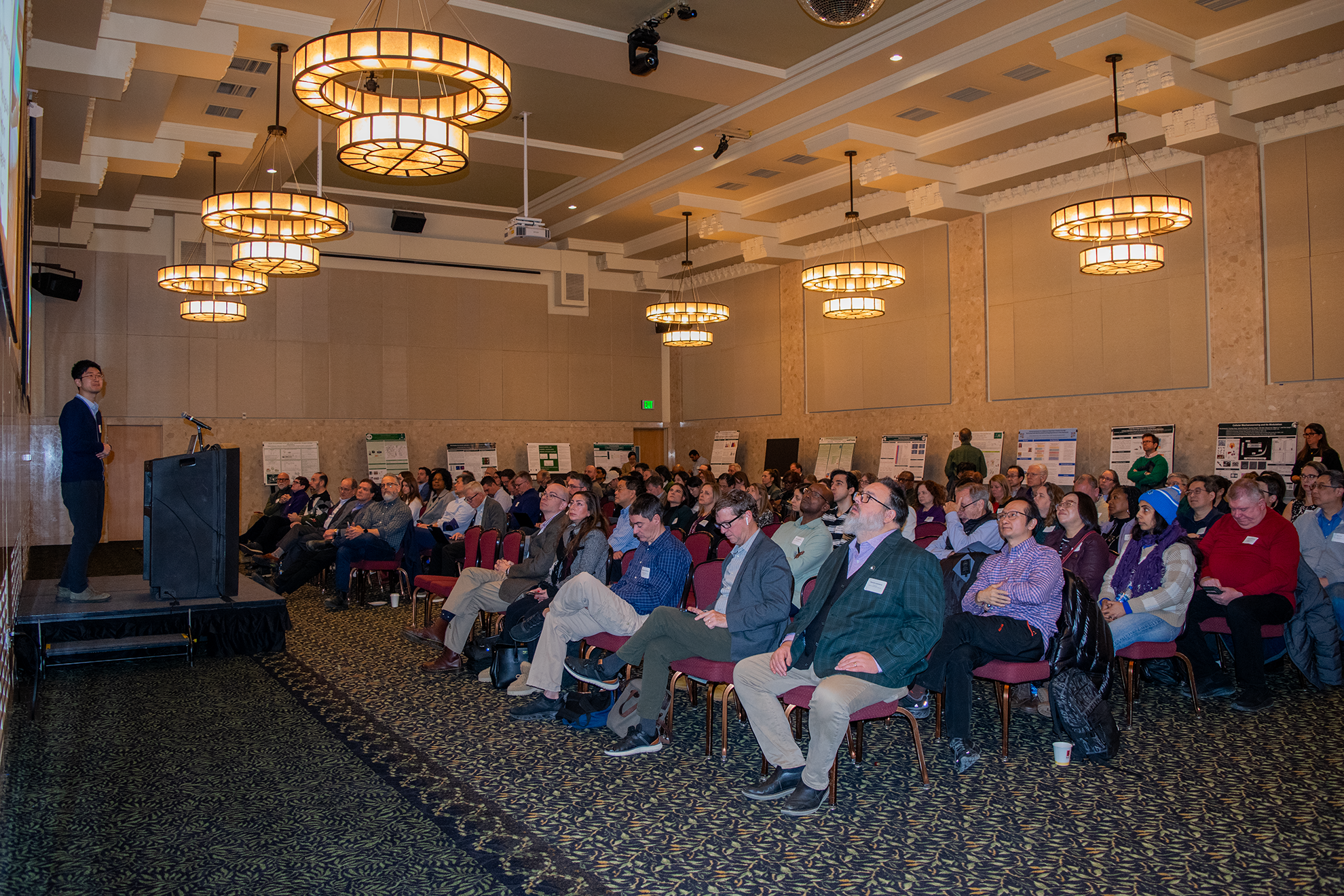
Assistant Professor Zhichao Cao presents on behalf of his Tetrad team to a full house.
MSU researchers convened at the MSU Union Ballroom on January 28, 2026, for the Tetrad Symposium.
Launched in Fall 2023, the objective of the Tetrad Initiative is to facilitate the formation of new collaborative teams that will continue to work together on novel areas of scholarship. The hypothesis for Tetrad was that new collaborations fostered by Tetrad grants would result in new researcher connections, fresh perspectives on research questions, and lasting collaborations that will further research programs and ultimately score new extramural support. The initiative, partially funded by the MSU Research Foundation, is coordinated by Kay Connelly, Associate Vice President in the office of Research and Innovation, and was proposed by Jack Lipton, Chair of Translational Neuroscience and Victor DiRita, Chair of Microbiology, Genetics and Immunology, both of whom serve on the Tetrad Organizing Committee.
Funding for the initiative comes from the home PI’s department and college, the Office of Research and Innovation, and the MSU Research Foundation. 40 interdisciplinary teams were awarded funding and shared the results of their projects at the symposium to a full house. 34 teams showcased their results in a poster session, and the remaining six teams were selected to give 10-minute presentations.
Funding successes that would not have occurred without their Tetrad grant are already being reported. Teams cite the advantages of their new, interdisciplinary approaches, and how their proposals are catching attention from external sponsors.
The Tetrad Program is a compelling reminder that collaboration is not just beneficial, it’s essential. By connecting researchers across colleges, disciplines, and methodologies, we see how collaboration itself enables team members to tackle complex problems with broadened perspectives and expertise. The results we’re seeing are a direct result of that shared creativity and intellectual exchange.Jack Lipton, Associate Dean for Research Analytics, College of Human Medicine
Projects collectively demonstrated how Tetrad funding catalyzes collaboration, infrastructure building, industry and community partnerships, and competitive proposal development, building momentum for external funding opportunities and other innovations.
One Tetrad team used their funding to develop AI tools that can help identify and track skin and soft tissue infections using clinical data, imaging, and thermal analysis. This support enabled the team to begin collecting patient data, build secure systems for cross-institution data sharing, prepare early findings for publication, and create a large, prospectively collected repository of multimodal clinical and visual data from partner health systems in Grand Rapids and Detroit. Their progress has already secured major external investment, including a $1M joint NSF/NIH award, to advance fair, privacy-preserving machine-learning models that can improve diagnosis and care across diverse healthcare settings.
Beyond the research, participants in the Tetrad Initiative highlighted positive aspects of expanding their research networks and working with new colleagues.
It is great to see so many colleagues from different departments and communicate with them. I feel like MSU is a big family, more than ever. I am so proud of this.Zhichao Cao, Assistant Professor, Computer Science and Engineering
Tetrad’s interdisciplinary impact reverberated with faculty who were not chosen during the application process, which used a lottery system due to high interest in the program. Natoshia Cunningham noted the application process got her working with a new set of collaborators and securing a half million dollars in external funding as a result of their Tetrad idea. The ripple effects of Tetrad’s emphasis on interdisciplinary collaboration extend well beyond funded teams, inspiring new partnerships and generating tangible returns through external awards and sustained research momentum.
What distinguishes the Tetrad Initiative is how effectively it seeds future research. These teams are generating early data, forming new partnerships, and securing competitive grants. Tetrad creates momentum that strengthens MSU’s research enterprise as a whole. This program is helping build the next generation of high-impact, externally funded projects.Kay Connelly, Associate Vice President for Operations and Strategy
Tetrad’s interdisciplinary design produced an exceptionally wide and diverse range of projects. Projects presented ranged from a longitudinal study showing how poverty, parenting stress, and community cohesion shape depression outcomes among Black adolescents, to the development of new iodinated polymers that provide CT visibility at 20× lower concentrations than previous materials. Other teams built an AI-driven driving assessment system capturing full body motion in a simulated environment, used hyperspectral imaging and AI chatbots to detect pathogens and improve food safety behaviors, and established a research–practice partnership with three Lansing elementary schools to address literacy, climate, and attendance challenges through shared data and continuous improvement.
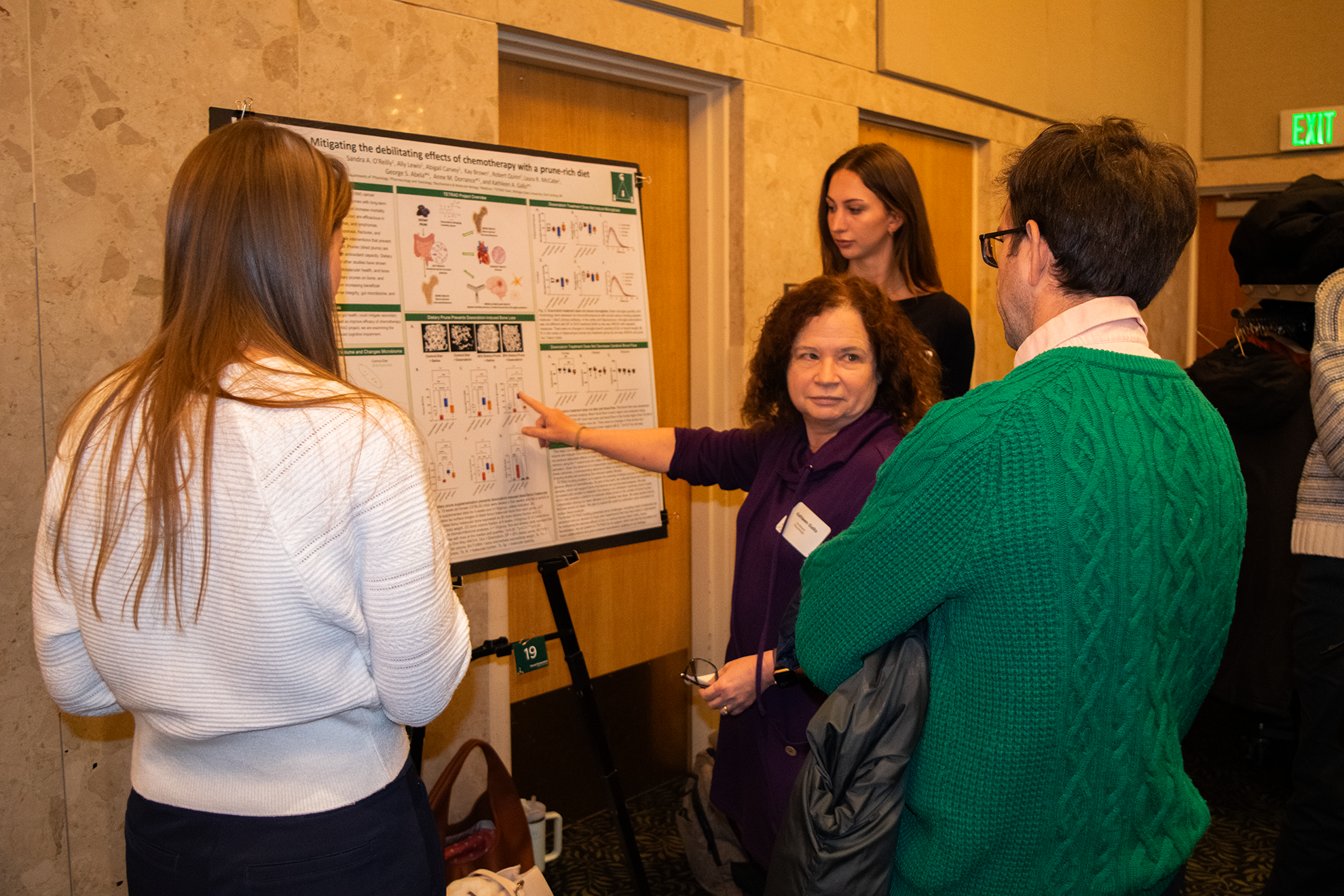
Cross-Disciplinary Collaborations
The Tetrad Initiative is designed to foster new interdisciplinary collaborations among faculty who have not worked together before.
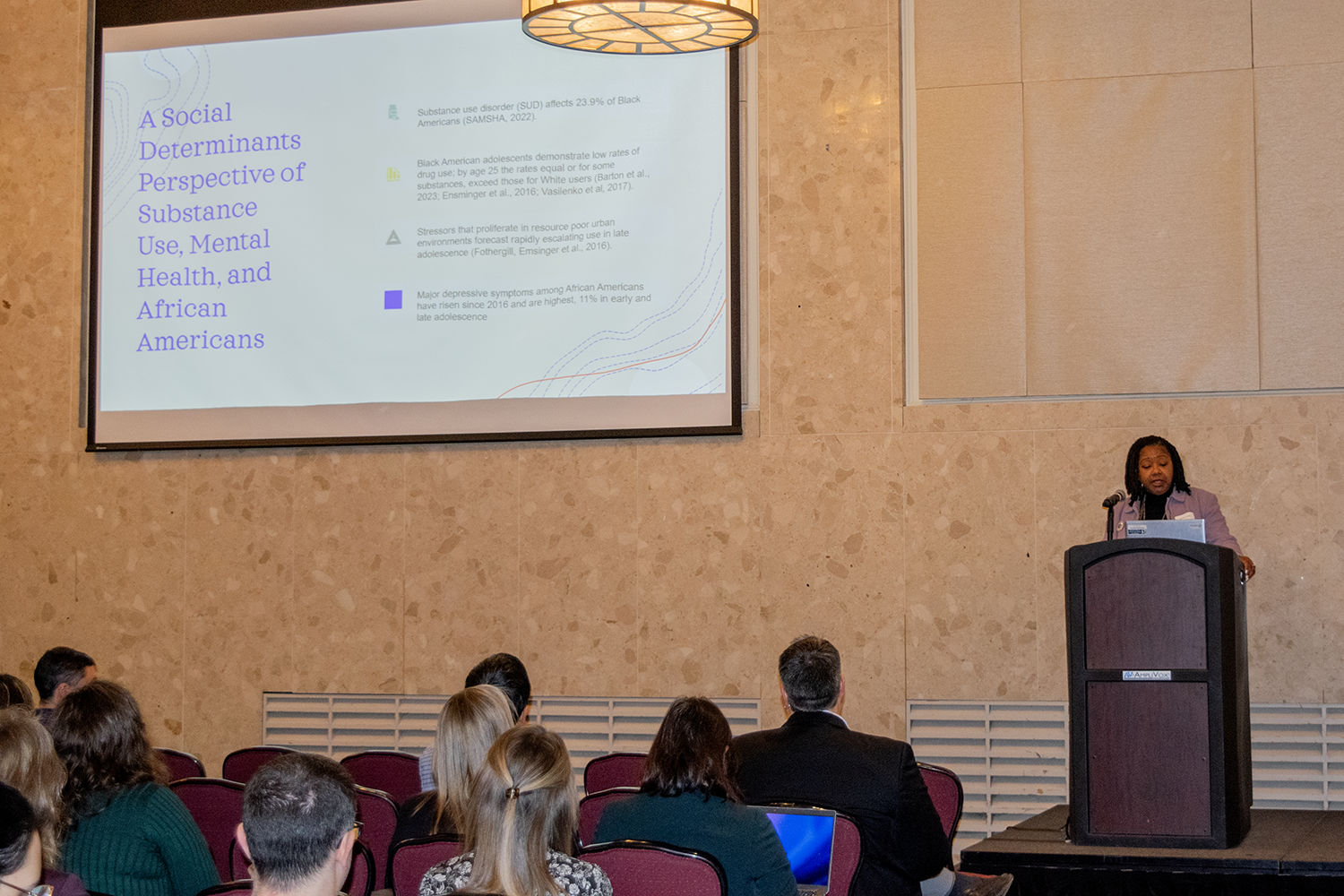
Driving Scholarly Growth
The Tetrad Symposium presents projects that create opportunities for extramural support of unique research programs. Emilie Smith presents on behalf of her Tetrad team.
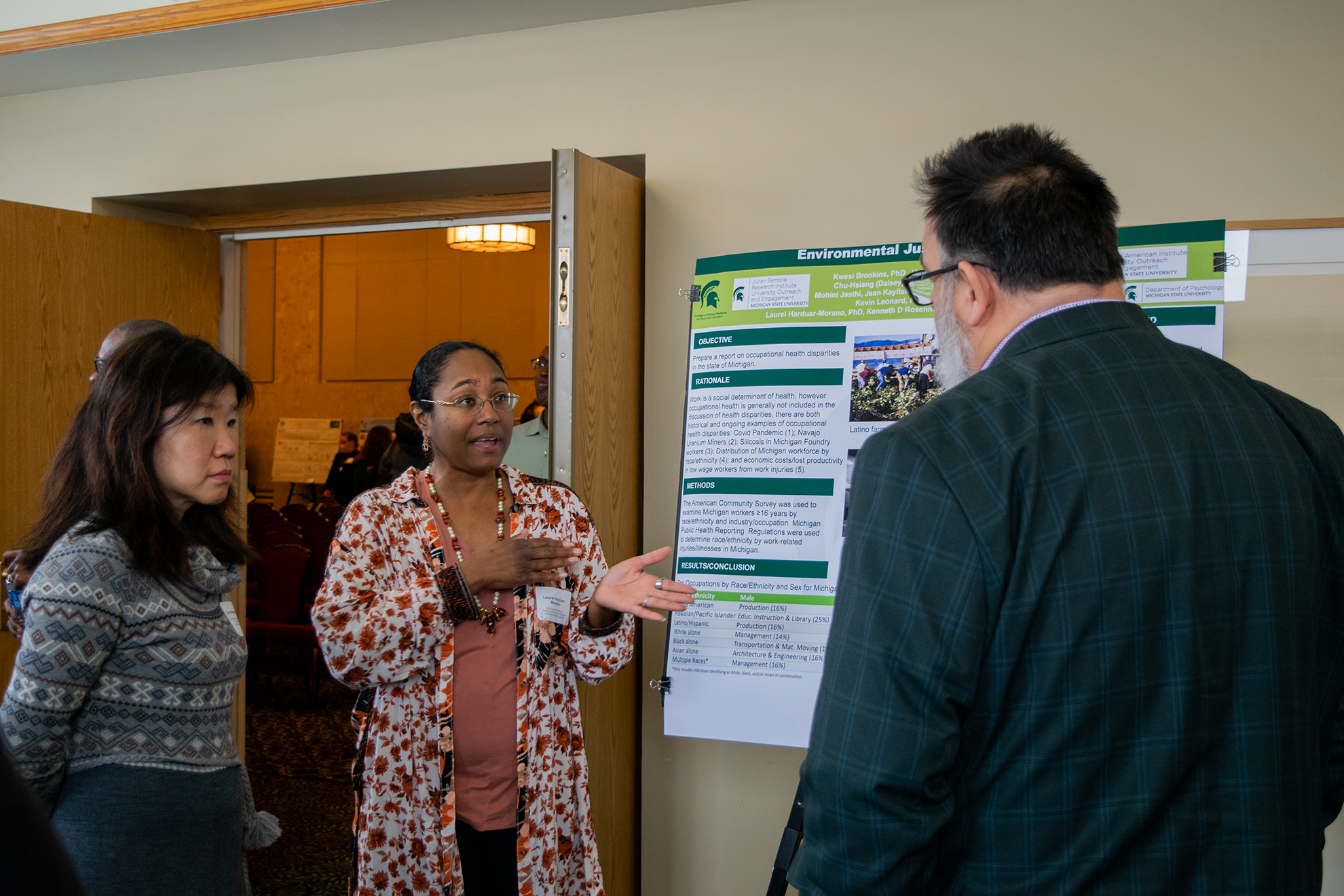
Wide Project Scope
Review the list of presentations and poster titles on the Tetrad Symposium page and learn more about the initiative on the Tetrad Initiative for Interdisciplinary Research page.