
Michigan State University’s Office of Research and Innovation, or ORI, hosted a fireside chat on Oct. 1 at the Wharton Center for Performing Arts between Vice President for Research and Innovation Shashank Priya and executives from North Wind, an independent national security capability accelerator. The conversation focused on how research universities, industry and government can work together to move dual-use technologies, innovations that serve both civilian and defense needs, from discovery to deployment faster.
The event was part of ORI’s National Security Initiative Distinguished Speaker Series, which gives the MSU community an opportunity to hear directly from national leaders and explore connections to their own research and teaching.
North Wind CEO Artie Mabbett, Executive Vice President for Physical Ecosystems Ryan Leo and Executive Vice President for Digital Ecosystems Tim Edwards discussed how AI, digital engineering, and advanced computing infrastructure are transforming technology development and compressing development timelines.
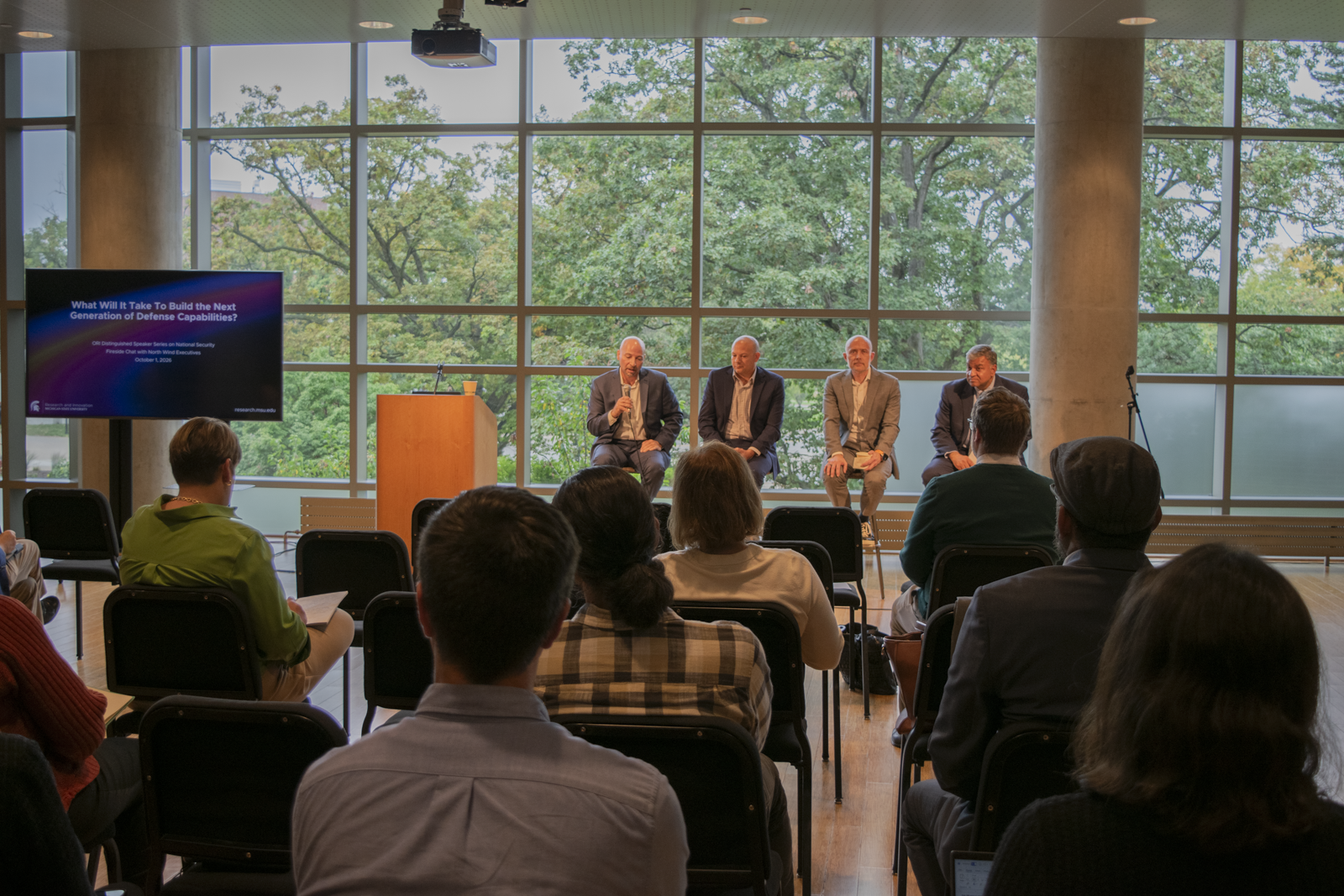
Conversations on AI, Innovation, and Impact
The event brought together members of the MSU community to explore how research universities, industry, and government can collaborate to advance innovation, workforce development, and national resilience.
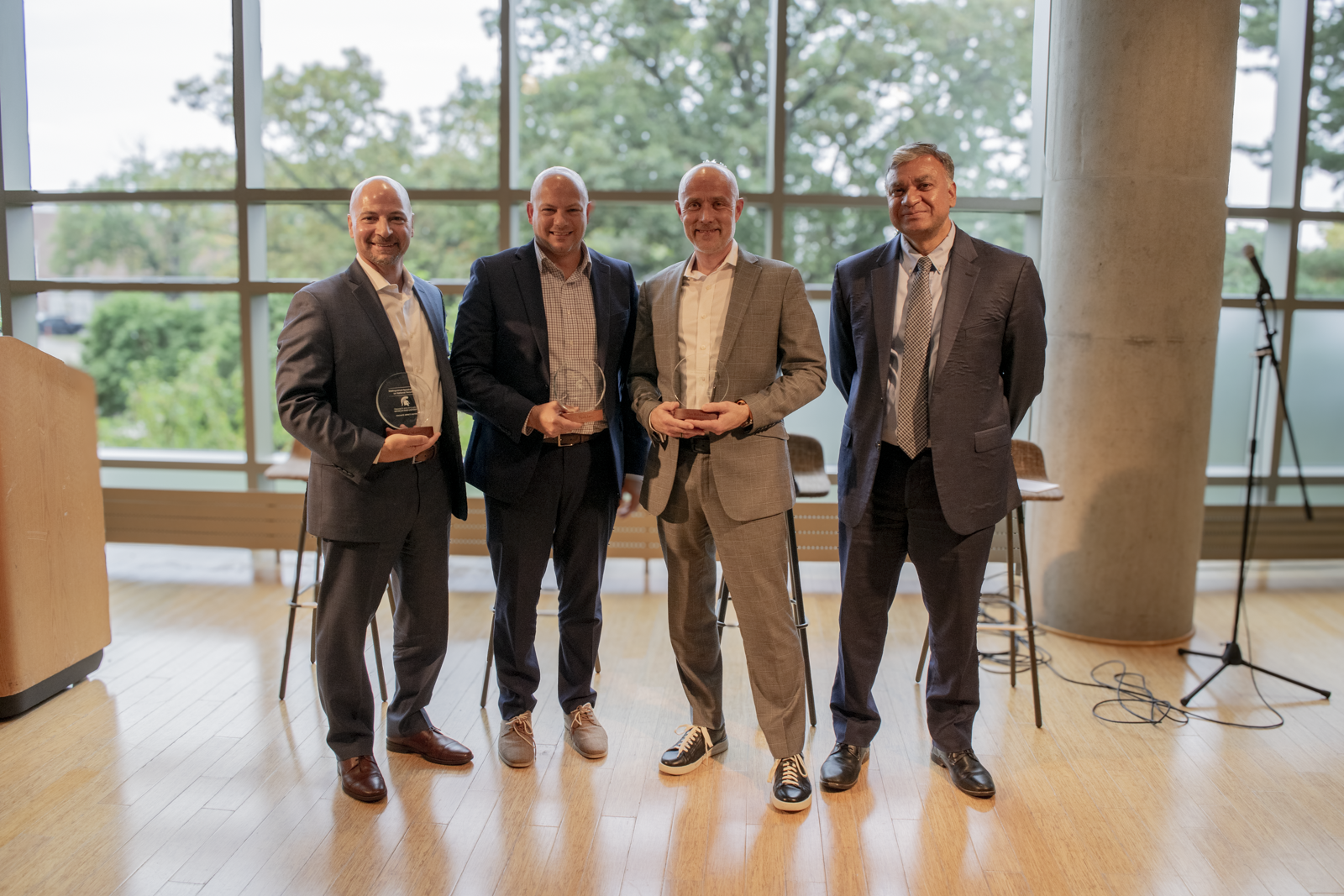
Bringing Leaders and Innovators to Campus
Left to right: North Wind executives Artie Mabbett, Ryan Leo, and Tim Edwards join MSU Vice President for Research and Innovation Shashank Priya for a discussion on dual-use technologies, workforce development and national security as part of the National Security Initiative Distinguished Speaker Series.
Moderating the discussion, Priya asked about the role a research university can play in bringing together industry, federal and state partners to develop strategies for innovating in a rapidly changing national security landscape. Panelists emphasized that today’s challenges increasingly require collaborative networks rather than isolated organizations, creating opportunities for universities to serve as conveners, technology incubators and workforce development partners.
“The environment today is around collaborative teams rather than vertically integrated systems,” Edwards said. “Incubating the technologies and finding a way to spin them out rapidly so that they can be tested in the market is a critical need of industry at this moment and one that requires an ecosystem capable of moving ideas from discovery to deployment at speed and scale.”
To illustrate how quickly the field is moving, Leo described how applying AI turned a six-month testing process into two and a half days while yielding the same volume and quality of data, an example of how digital capabilities can accelerate the learning curve.
The executives also stressed the importance of helping students navigate emerging technologies and preparing them to contribute to interdisciplinary environments. They described workforce development as a critical role for higher education, particularly as these technologies continue to transform how work is performed across sectors.
“Workforce development remains one of the most important roles universities play,” Mabbett said. “As technologies like AI and digital engineering reshape how work gets done, students need opportunities to build and apply their knowledge across disciplines and gain experience solving real-world problems in collaborative environments.”
Audience questions focused on the role of AI and computing infrastructure, and on how to encourage students to think beyond traditional disciplinary boundaries. Panelists stressed that future national security challenges will require expertise spanning engineering, computing, manufacturing and other fields, and pointed to the value of exposing students to real-world projects and partnerships early in their academic careers.
Advancing dual-use innovation at MSU
The Distinguished Speaker Series is part of ORI’s National Security Initiative, which builds on MSU’s strengths by fostering collaboration, expanding strategic partnerships and creating new opportunities for research, innovation and workforce development in fields critical to national security and resilience. A central focus is dual-use research: work in areas such as agriculture, energy, health, advanced manufacturing and computing that delivers broad societal benefit while also strengthening the nation’s security.
“National security is shaped by our ability to innovate,” Priya said. “From food security and energy resilience to advanced manufacturing, health technologies and cybersecurity, the challenges we face require new ideas and new partnerships. Many of the breakthroughs emerging from university research are dual-use technologies that benefit society while also strengthening national security. Through the National Security Initiative and this speaker series, we are creating the conversations and collaborations that move those technologies from MSU labs into the world.”
The series will continue throughout the academic year, bringing leaders from industry, government and academia to campus to discuss emerging technologies, dual-use innovation and partnerships that accelerate discovery and impact. Future events will give the MSU community opportunities to engage directly with experts working at the intersection of research, technology and societal impact. For more information, visit the National Security Initiative Distinguished Speaker Series website.