Michigan State University researchers are leading the development of a next-generation biometric recognition system that could transform how individuals are identified in challenging environments. Supported by a $12 million grant from the Intelligence Advanced Research Projects Activity (IARPA), the project is tasked with solving a difficult national security challenge: recognizing individuals from cameras operating at long distances and high altitudes, where traditional facial recognition technologies often fail.
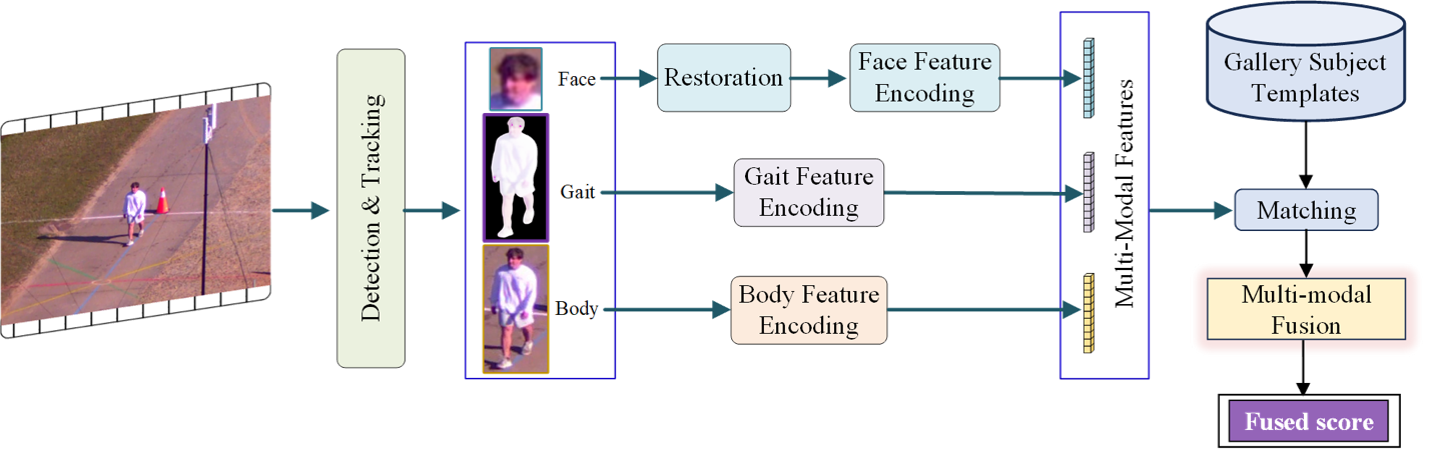
The MSU-led team has developed a prototype system called FarSight (Fig.1), which combines multiple biometric indicators, including facial features, body shape, and gait, to identify people from drone video footage. Rather than relying solely on close-up images of a person's face, which are not always possible to capture from an overhead drone, the system combines information from how a person walks, their height and body structure, and any available facial data. This multimodal approach allows recognition to prevail even when drones capture only partial or low-quality views of an individual. Researchers have already demonstrated successful identification from distances of 300 to 400 meters and are working to extend that capability to 600 to 700 meters.
The national security implications are significant. Technologies like FarSight could help military and intelligence agencies locate and identify individuals in remote environments, assist law enforcement during search and rescue operations, and improve disaster response scenarios.
Many of the same advances that support national security applications can also improve the technologies the public uses every day. Enhanced biometric recognition could strengthen smartphone authentication, aid in finding missing persons, and support public safety operations during emergencies. The project's findings are already impacting the field's understanding of human identification, showing that characteristics such as gait and body shape can sometimes provide more reliable information than facial images at long distances.
By bringing together expertise in artificial intelligence, computer vision, remote sensing, and biometrics, MSU researchers are advancing long-distance recognition technologies that enhance national security and provide future opportunities to strengthen public services.