
How Northwest Michigan Preschoolers Learn to Like Fruits, Vegetables, Mindfulness
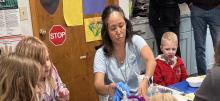
Food-Body-Mind is coming back to Northwest Michigan Community Action Agency, or NMCAA, Head Start preschool classrooms to help students learn how to care for their bodies and minds. And if they’re like their older siblings, they may even like it.

Helping Children Conquer Their Chronic Pain
When chronic stomach pain stole Kara Davis’s childhood, relief felt out of reach until she joined a Michigan State University study that changed everything. Led by MSU’s Natoshia Cunningham and supported by the NIH, the ADAPT program teaches kids tools to manage pain and anxiety, helping them move from pain to power.
Genetics Tip the Scales for Trout in a Warming World
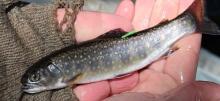
A new study in Nature Communications reveals that genetic variation across brook trout populations may influence which groups are better equipped to handle rising water temperatures. The findings highlight how local adaptations could play a key role in species survival and inform strategies to strengthen at-risk populations.

Lack of Childcare Access Limits Michigan’s Labor Force
Childcare isn’t just hard to find in much of Michigan, it’s nearly impossible. With three children competing for every open spot, the shortage is reshaping families, businesses, and the economy itself. MSU researchers are digging into how this hidden crisis affects the state’s workforce and future.

Spartan Science Is Making Transportation Safer
Every time you buckle up, there’s a good chance Michigan State University research is helping keep you safe. With more than 50 faculty across MSU Mobility and the College of Engineering, Spartan researchers are tackling transportation challenges from every angle, including safer roads, stronger vehicles, smarter infrastructure and secure autonomous systems.

From Sap to Sustainability: Inside MSU’s Forestry Innovation Center
On a crisp spring morning in Michigan’s Upper Peninsula, a web of tubing threads through a stand of maples. Clear sap drips into collection lines, destined not only for syrup but for research that could reshape medicine, food safety and even the whiskey industry.
Using Crystals and Light, Scientists Unlock New Ways to Grow Materials On-Demand
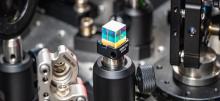
Researchers at Michigan State University have discovered how to "draw" on demand the crystals used in many crucial technologies, from solar panels and LED lighting to medical imaging. Appearing in the journal ACS Nano, the breakthrough was achieved by striking gold nanoparticles with a single laser pulse.

Seeds of Hope
College of Natural Science plant researchers are racing to build climate-resilient crops before global food systems reach a breaking point.

Fuel for the Finish Line: How Sperm Achieve ‘Overdrive’
Michigan State University scientists have pinpointed the molecular “switch” that supercharges sperm for their final sprint to an egg — a breakthrough that could reshape infertility treatments and pave the way for safe, nonhormonal male contraceptives.

Researchers Lead $3.7M Study to Shed Light on Perimenopause and Psychosis
For decades, women’s midlife experiences have been largely overlooked by medical research. Despite previous assumptions about midlife mental health risks, relatively little research has systematically investigated the connections between hormonal fluctuations and psychological symptoms.