

Strakovsky Explores Effects of Chemical Exposure During Pregnancy and Beyond
Rita Strakovsky, an assistant professor in the Michigan State University Department of Food Science and Human Nutrition, has devoted her career to studying how chemical exposure affects mothers and their developing babies.
BioRender Licensing
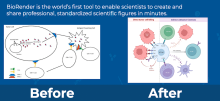
To support the academic community, the Office of Research and Innovation is thrilled to offer BioRender at the subsidized rate of $138.22 per year, providing faculty and students with an affordable solution to create stunning, publication-quality graphics that effectively convey complex scientific concepts.

Supersized Fruit Eater Database on Climate Change Frontline
To conserve fragile biodiversity hotspots, a crucial step is knowing how fruit eaters are doing. Scientists and students at Michigan State University have created a supersized database to keep track of such animals and birds.

Spartans Win Design Hack in Las Vegas
The MSU Super Spartans won the design hack in Las Vegas at the 2023 Siemens Realize Live conference, June 12-15. There were more than 3,000 corporate attendees at this event.

MSU-DOE Plant Research Lab Awarded $12M Grant Renewal
The U.S. Department of Energy has awarded the MSU-DOE Plant Research Laboratory a $12M competitive renewal grant to continue research in photosynthetic energy capture, conversion and storage.

Plant Science Excellence
The Plant Science Excellence Committee has developed a new long-term plan, including a faculty hiring initiative.

Sprowl Named Udall Scholar
Roxy Sprowl is the 13th Udall Scholar to be named from MSU. Sprowl is an Honors College junior majoring in social work in the College of Social Science with minors in race and ethnicity of the United States, and American Indian and Indigenous Studies.

Engineered Nanoparticles for Effective Brain Cancer Detection and Treatment, Meghan Hill
Meghan Hill is currently a 4th year PhD student in the lab of Taeho Kim, based out of the Institute for Quantitative Health Science and Engineering. Her research is focused on developing new nanoparticle systems that can be used for early diagnosis and treatment of brain cancers. Meghan came to our attention after she recently placed 1st in the MSU 3-minute thesis competition and competed at the Midwest regional 3-minute competition in Chicago.

MSU Water Alliance
The MSU Water Alliance brings together experts across the University to push the boundaries of discovery and find solutions to water-related challenges through research, education, and engagement with communities and industries.

Using Prussian Blue Nanoparticles to Diagnose and Treat Brain Cancer
Meghan Hill is a graduate student in the Department of Biomedical Engineering. Her studies involve Prussian Blue nanoparticles and how they can impact cancer research.