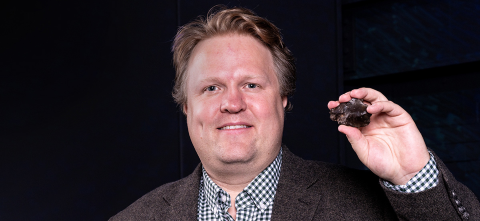
Planetary Scientists Help Advise NASA’s Planetary Defense Efforts
An asteroid wiped out the dinosaurs 66 million years ago — and scientists know it could happen again. While no object that large currently threatens Earth, NASA continues to track potentially dangerous space rocks. Michigan State University researchers contribute critical insights into how asteroids behave and how they could be deflected.
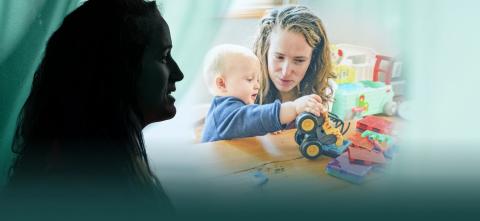
A Lifeline for Those Experiencing Postpartum Depression
After the birth of her second son, Gabrielle Ekstrum was overwhelmed by emotions she couldn’t explain. Through Michigan State University’s ROSE program, she learned to recognize postpartum depression and reach out for help early. Her story shows how timely support can save lives and reshape care for parents nationwide.
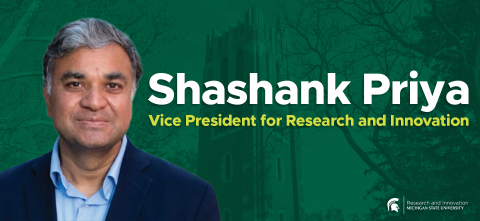
MSU Welcomes Shashank Priya as Vice President for Research and Innovation
After the completion of a national search, Shashank Priya has been selected as the new VP for Research and Innovation.

NIH Awards $3.1M to MSU To Study the Impact of Stuttering on Children
Researchers in MSU’s Developmental Speech Laboratory received $3.1 million from the National Institutes of Health for a five-year study examining why stuttering affects some children more negatively than others. The project is the first large-scale longitudinal study to focus on how the adverse impacts of stuttering develop in children.
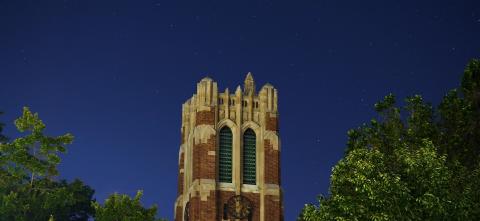
Astronomers Capture New Images of Star Explosions in Real Time
Astronomers have captured unprecedented, detailed images of two stellar explosions — known as novae — within days of their eruption. The breakthrough provides direct evidence that these explosions are more complex than previously thought, with multiple outflows of material and, in some cases, dramatic delays in the ejection process.
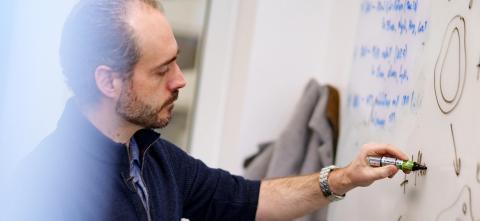
Scientists Create First Human Heart Organoid To Replicate A-Fib
Though an estimated 60 million people around the world have atrial fibrillation. It’s been at least 30 years since any new treatments have been developed. This is because researchers haven’t had accurate models of the human heart to study. Thanks to new developments from Michigan State University scientists, that is no longer the case.

How Social Media Shapes Tolerance and Echo Chambers
A Michigan State University–led study explores how social media might strengthen or weaken echo chambers. The study focused on social media use and the attitudes of young people who leave rural areas to attend university and the attitudes of their parents who stay behind.

Is Narcissism a Uniquely American Trait? A New Study Suggests Not
But a recent study from researchers at Michigan State University’s Department of Psychology found that narcissism is a universal trait with consistent patterns across cultures. Interestingly, their findings indicate the U.S. is not even in the top five countries with the highest levels of narcissism — and that rates are higher among young adults and men.
Announcements