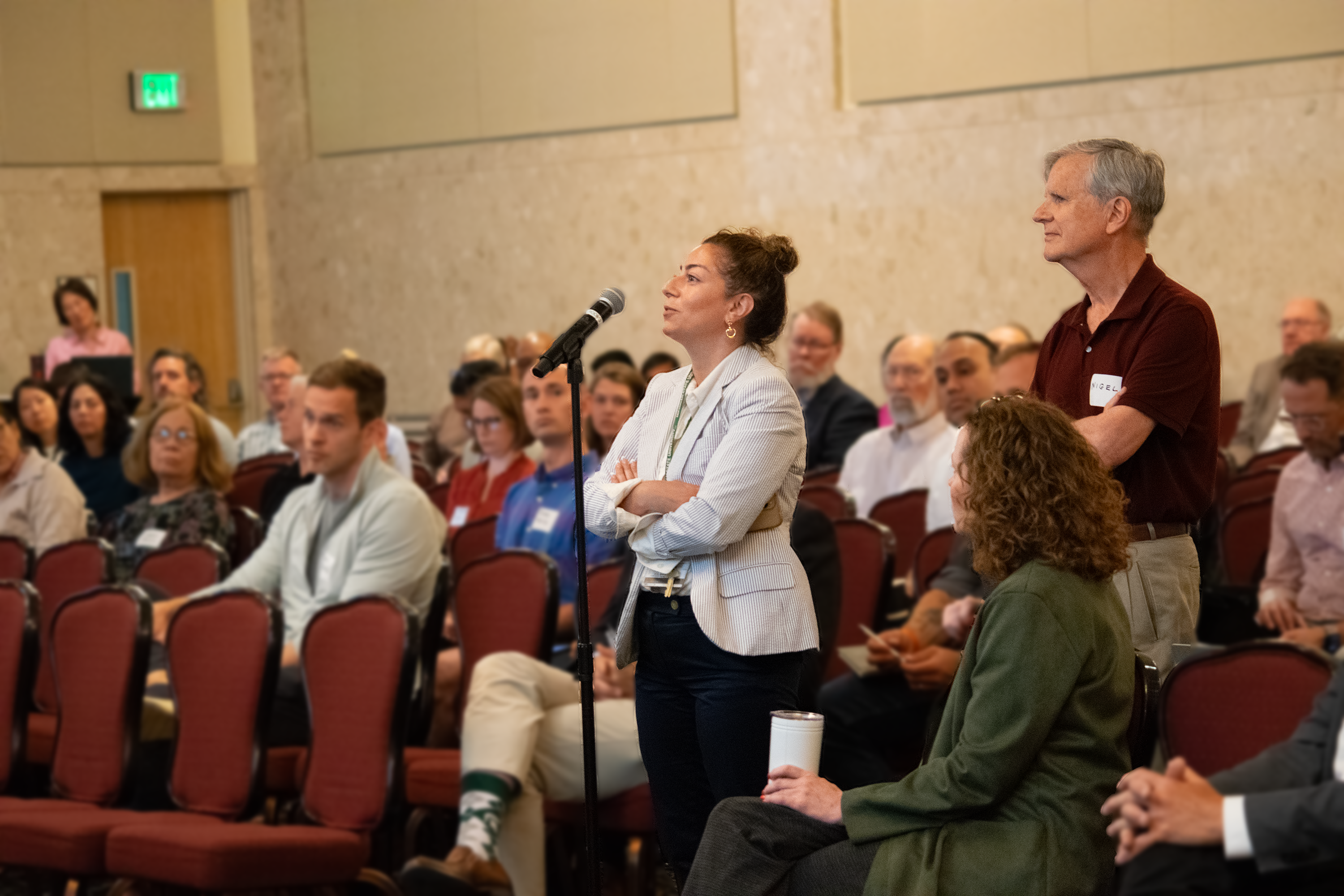
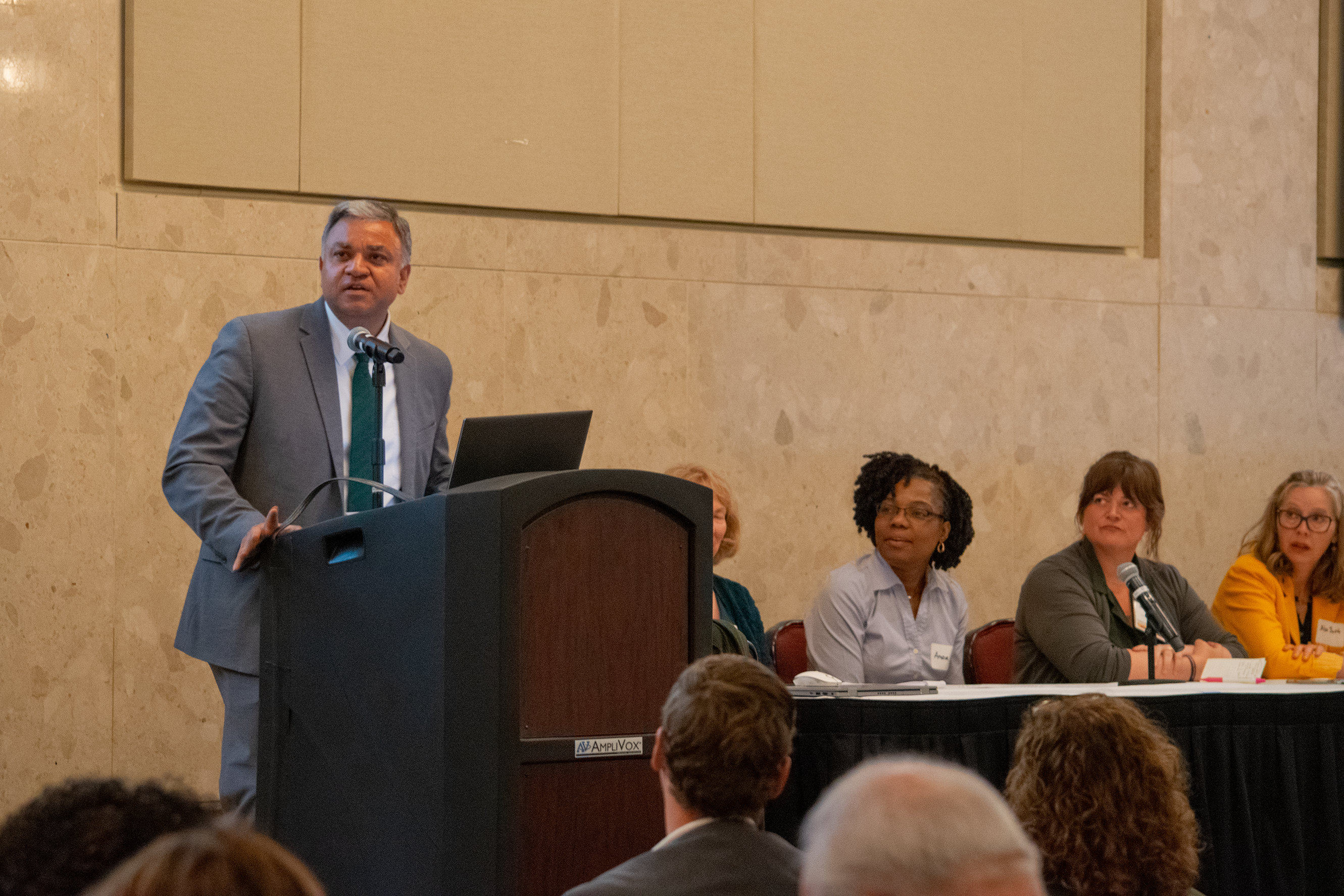
Vice President for Research Shashank Priya affirms the One Health Research Network will continue as planned.
Michigan State University convened faculty, researchers and institutional leaders at the One Health Research Summit to mark a major milestone in the university’s faculty-based effort to advance interdisciplinary solutions to complex health challenges. Grounded in the One Health framework, which recognizes the interconnectedness of human, animal, plant, and environmental health, the summit highlighted both the collaborative process and the forward-looking vision that have taken shape across the university this spring.
The summit represents the culmination of MSU’s One Health Research Sprint, a highly collaborative initiative that engaged more than 600 faculty from 15 colleges and over 50 departments. The sprint was co-led by Kay Connelly, Associate Vice President, and Patricia Soranno, Senior Advisor, from the Office of Research and Innovation. A central goal of the sprint was to begin to build the faculty community itself: to connect researchers across colleges who had not worked together and give them shared ownership of the themes that resulted. Through a Request for Information, interactive workshops, and cross-disciplinary team formation, faculty contributed more than 300 ideas that were refined into a shared research agenda. This process emphasized broad participation, open input, and iterative development, ensuring that the resulting research themes reflect the depth and diversity of MSU’s research community.
At the summit, faculty teams presented five interdisciplinary pathway visions that will guide future research and collaboration: pathogens and antimicrobial resistance; environmental exposures; food production to nutritional health; biodiversity and resilience of living systems; and social and institutional systems. Each pathway brings together expertise from across disciplines, highlighting MSU’s ability to connect insights across domains and address challenges that no single field can solve alone.
“The depth and breadth of ideas generated through this sprint reflect the extraordinary range of expertise across MSU,” said Patricia Soranno, senior advisor in the Office of Research and Innovation and sprint co-lead. “This was intentionally designed as a faculty-driven process, from the initial submissions to the workshops and pathway development, so that what emerged is not a top-down framework, but a truly collective vision shaped by hundreds of researchers working across disciplines to define what One Health Research can be at MSU.”
The event also underscored the intentionally collaborative approach that defines One Health Research at MSU. From early-stage idea generation through facilitated workshops and team-based visioning, faculty worked across traditional boundaries to build new connections, identify shared priorities, and co-create a unified research direction. This model not only strengthens individual research pathways but also fosters a culture of collaboration that will continue as the initiative evolves.
“What we are seeing through One Health Research at MSU is the power of bringing disciplines together to address challenges that cannot be solved in isolation,” said Shashank Priya, vice president for research and innovation. “By aligning our strengths across colleges and elevating faculty-led ideas, we are not only shaping a shared research agenda, we are also positioning MSU to lead in advancing solutions that improve health across communities, environments, and systems.”
As MSU prepares to launch the One Health Research Network in fall 2026, the summit positions the university to become a leader in applying the One Health Research framework at scale. By aligning institutional strengths, mobilizing broad faculty expertise, and prioritizing interdisciplinary collaboration, MSU is well positioned to drive innovation, attract external partnerships, and advance impactful research that addresses global challenges at the intersections of health, environment, and society.
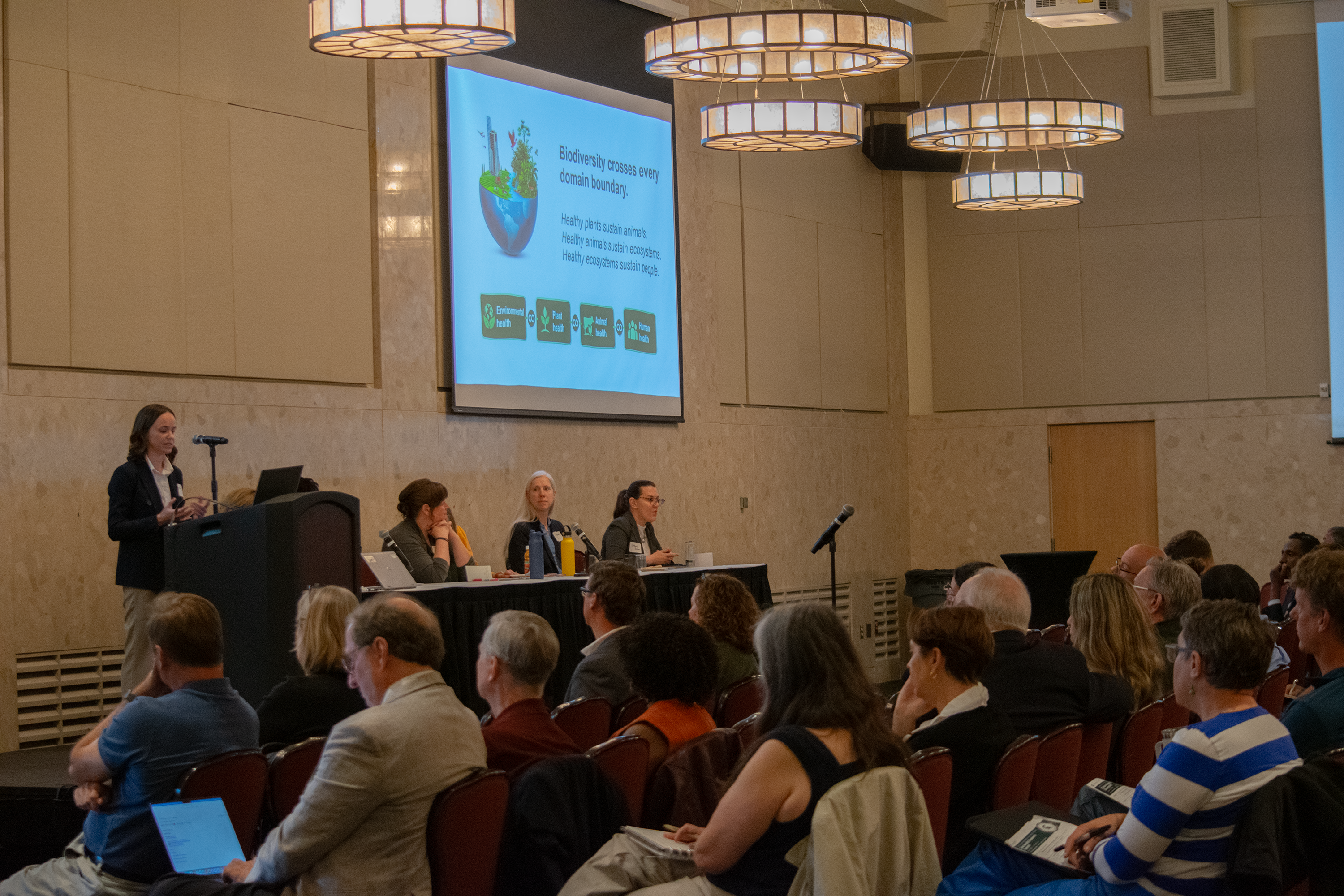
Five Vision Papers Presented