
Afro-Caribbean Artists Reclaim Stories of Slave Trade in New Documentary
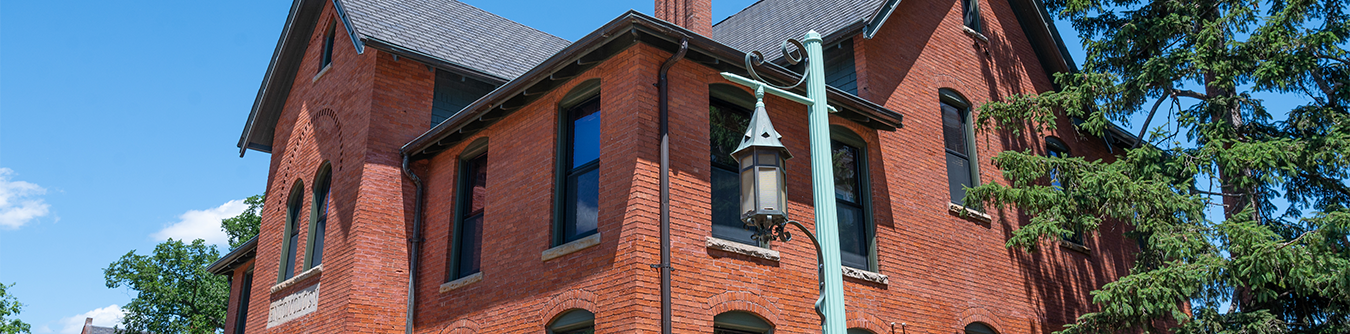
Safoi Babana-Hampton, Professor of French and Francophone Studies in the Department of Romance and Classical Studies at Michigan State University, has produced and directed a documentary that features artists, historians, and policymakers who challenge Eurocentric narratives to reclaim, reshape, and preserve the memory of the Black Atlantic experience.
Study Raises the Possibility of a Country Without Butterflies
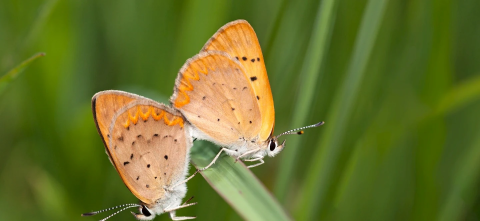
Butterflies are disappearing in the United States. All kinds of them. With a speed scientists call alarming. Elise Zipkin, director of MSU’s Ecology, Evolution and Behavior Program, and her MSU colleague and co-author Nick Haddad, professor of integrative biology in EEB, have been major figures in assessing the state of U.S. butterflies.

How MSU’s Global Reach Benefits Michigan
MSU is one of the most internationally engaged universities in the U.S. With more than 350 partnerships in 60 countries and more than 1,600 faculty and academic staff involved in international research, teaching and outreach, MSU continues to share knowledge and improve lives around the globe and right here in Michigan.

MSU Scientists Discover New Sources for ‘The Molecule That Made the Universe’
From helping catalyze interstellar reactions and fueling the birth of stars to its presence in neighborhood gas giants like Saturn and Jupiter, trihydrogen, or H3+, is best known as the “the molecule that made the universe.”
Pestka Seeking to Improve Treatments for Autoimmune Diseases
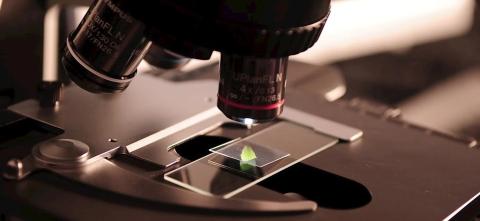
According to the American Autoimmune Related Diseases Association, as many as 50 million Americans may be living with an autoimmune disorder. Many of these remain undiagnosed and, without intervention, can worsen over time. Given current treatment options, however, even those being actively managed can be met with complications.
MSU Brings New Approach to Stopping the Biodiversity Crisis
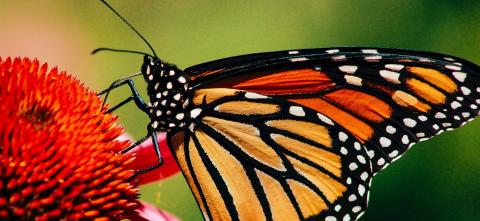
What if saving one animal species from extinction at a time isn’t the most effective approach? Michael Belitz, a Michigan State University postdoctoral researcher in the Zipkin Quantitative Ecology Lab, asked himself that question during his graduate work protecting a single butterfly species.
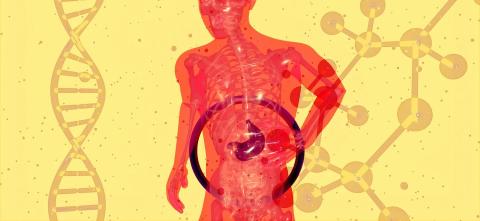
More Than a Gut Feeling: How Climate Change Affects GI Health
From heat-related illnesses to the geographic expansion of infectious diseases, the effects of climate change on human health are complex. And indeed, dimensions of this interaction, such as the impact of climate change on gut health, remain overlooked. Emerging research shows this global phenomenon may make you sick to your stomach — literally.
MSU Reports $932 Million in Research Expenditures
Michigan State University reported a new record of $932 million in research and development expenditures for the fiscal year 2024, maintaining a positive trajectory with cumulative 30% growth over the past three years.
Announcements