
oldentomologybldg.png

News

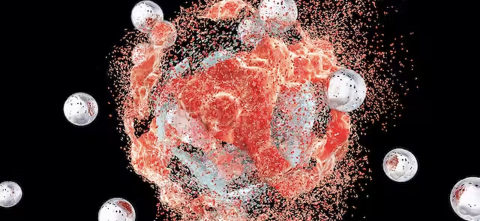
COVID-19 chromosome graphic.

How Physicians are Using Machine Learning to Predict COVID-19 Mortality

Advancements in artificial intelligence, automation, and machine learning are changing the landscape of healthcare as we know it. That means bridging the gap between technological innovation and medicine has never been more important.
Women sitting against a wall with graffiti.

Examining Discrimination and Adolescent Substance Use

The National Institute on Minority Health and Health Disparities, part of the National Institute of Health, awarded Yijie Wang, assistant professor in the Department of Human Development and Family Studies, and her team a five-year, $2,108,204 grant to investigate adolescents’ experiences of multiple forms of discrimination and its implication for substance use.
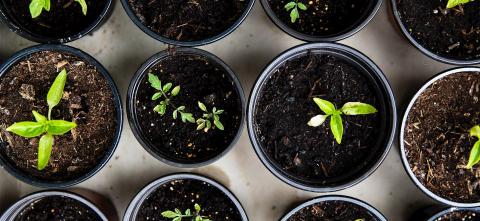
Potted plants lined up with small plants.

Making Sense of Life: Genes, Environment and Evolution

Michigan State University researchers are shedding light on a mystery of evolution with support from a $1.9 million grant from the National Institutes of Health: How is it that within the same species, individual responses to stimuli can dramatically differ?
Michigan State University students walking on a group on campus.

Making Entrepreneurship and the Societal Impacts of Research Count

Two MSU leaders are part of a multi-institution team that has published a paper in the journal Science that provides recommendations for incorporating innovation, entrepreneurship, and other scholarly endeavors that impact society into university promotion and tenure (P&T) criteria.
White city skyline in the background, with a car made from green leafs.

Building Greener Vehicles with Help from Plants

Spartan engineers and Ford Motor Co. are creating new polymers and composites for the automotive industry using sustainable materials from nature.
Ground level view of a tilled crop field.

MSU Receives $2 Million EPA Grant to Explore Biosolid Treatments

The group will investigate the impact of current biosolid treatment methods used by wastewater treatment facilities on a variety of pollutants in soil, water and plants.
Handing a colorful woven basket.

Developing a Guide for Working with Tribal Communities

The Reciprocal Research Guidebook provides a framework for establishing sustainable and equitable partnerships between faculty and Indigenous Nations.
Toddler playing on the floor.

Building a More Complete Picture of Early Brain Development

MSU is leading a large international study to understand the genes involved in brain development and possible connections to psychiatric and neurological disorders.
Announcements
College of Nursing Cracks Top 25 in Research Funding
MSU’s College of Nursing has climbed into the top 25 nationally for NIH research funding. The ranking reflects growing support for impactful research in areas like health promotion, disease prevention and patient care.
Hanna Making History and Transforming Public Health
MSU physician Mona Hanna is transforming public health through Rx Kids, a program providing direct cash support to families to reduce infant poverty and improve early outcomes.
McCarthy Named to Accounting Hall of Fame
William McCarthy, professor in the Department of Accounting and Information Systems will be inducted as the 128th member of the Accounting Hall of Fame in August 2026.
Douglas Joins National and Global Science Committees
MSU philosophy professor Heather Douglas has been appointed to national and international committees shaping research ethics and scientific responsibility.
FRIB Inaugurates K500 Chip Testing Facility
The Facility for Rare Isotope Beams or FRIB at Michigan State University today marked the inauguration of the K500 Chip Testing Facility or KSEE, expanding U.S. capacity for radiation effects testing of advanced microelectronics used in spaceflight, defense, wireless communications, and autonomous systems.
Jin Selected for National Early Career Energy Innovation Program
MSU researcher Bill Jin has been selected for a national ARPA-E Early Career program, earning $500,000 to develop ultra-flexible, self-healing concrete for extreme energy environments. His innovation aims to strengthen critical infrastructure and improve energy reliability.