

Some Studies Might Not Paint Full Picture of How Plants Respond to Climate Change
Scientists may be underestimating how plants will respond to rising global temperatures when they study hot summers but not warming winters, Michigan State University ecologists found.

Transforming Waste Into a Public Asset: Michigan State University Leads Next-Generation Anaerobic Digestion Innovation
As conversations continue to build among policymakers and industry leaders on how to best address nutrient runoff, energy transition and sustainable waste management in the Great Lakes region, Michigan State University scientists are pioneering solutions that transform organic waste into a public asset.

Smith Leads Innovative Effort to Protect Lake Whitefish Using Genetic Markers
A Michigan State University researcher is leading a groundbreaking genetic effort to protect Lake Michigan’s dwindling lake whitefish population, an essential species for ecosystems, economies, and tribal communities alike.

MSU-Led Research Team Receives $500K Grant to Combat Herbicide-Resistant Weeds in Soybeans
A national research team led by Michigan State University has received a $500,000 grant from the United Soybean Board to develop new diagnostic tools for herbicide-resistant weeds in soybeans. The award currently covers one year but can be extended for up to three years.
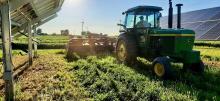
MSU Researchers to Explore Viability of Agriculture, Solar Power Generation Together in Michigan
Michigan State University researchers and MSU Extension educators are evaluating the potential of agrivoltaics — which combines agricultural operations with solar energy production — in Michigan.

Critical Mass: Core Upgrades Pave Way for Spartan Science
A revamped facility space, installation of advanced instruments, and the vision of a new director are providing Spartan scientists with the tools they need to achieve cutting-edge science at MSU’s Mass Spectrometry and Metabolomics Core.

MSU Project Documenting Enslaved Individuals Publishes Latest Data of Black Americans Born Before Emancipation
Michigan State University’s Enslaved.org, in partnership with other organizations, documents the lives of named enslaved individuals of African descent. Its latest data release makes information on two million Black Americans born before emancipation, identified in the 1900 census, available for discovery and download.

Puckett Leads Postcard Research Project to Connect Members of the Transgender Community
Researchers from Michigan State University and the University of Oregon have given out over 10,000 postcards to the community over the past couple of years — postcards that highlight what resilience means to the transgender and nonbinary community.

Spartan Science Protects the Food on Your Table
From apples to potatoes and from farm fields to your family table, MSU researchers are helping ensure that fresh, healthy food stays available, affordable and safe.

MSU Research A to Z
Explore 26 ways Spartan research is improving lives — from A to Z. These examples offer just a glimpse into the wide-ranging impact Spartans are making every day through discovery and innovation.