

How Viruses Know What’s Theirs
Researchers at San Diego State University and Michigan State University are shedding new light on how viruses meticulously pack their genetic material — a breakthrough that could help researchers engineer antivirals and gene therapies.

Research Contributes to MEDC Report of Michigan’s EV Charging Stations
Michigan State University researchers have contributed to a recent report from the Michigan Economic Development Corporation, or MEDC, and its Office of Future Mobility and Electrification that reveals how many EV charging stations the state needs and where they should be located to meet the current and future demands for EV in the state.

New $3M NIH grant supports Henry Ford + MSU researchers studying HPV-positive head and neck cancers
Researchers from Henry Ford Health + Michigan State University Health Sciences have been awarded a $3 million grant from the National Institute of Dental and Craniofacial Research to study new treatments for patients who have head and neck cancer caused by the human papillomavirus, or HPV.

Shoreline Armoring of Michigan’s Lake Michigan Coast Increased Fivefold During the Latest Period of High Water
Shoreline armoring along Michigan’s Lake Michigan coast has surged fivefold since 2014, as property owners raced to protect land from rising water levels. But new MSU research shows these hard structures, while protective in the short term, may fuel erosion and threaten ecosystems, raising tough questions for the future of coastal management

Politics Shape What Brazilians See on TV About Energy Shortages
A new study led by Karina Ninni Ramos of the Center for Global Change and Earth Observations, reveals that relationships between presidents and the press strongly influence how the country’s biggest broadcasters cover energy shortages, blackouts, and rationing.
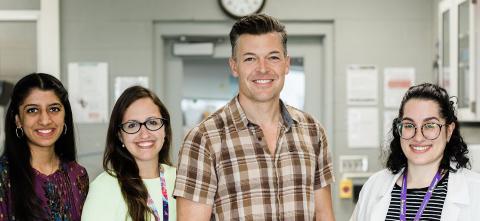
Decoding the Second Brain
Trust your gut is more than an expression. The gut’s ability to influence our wellbeing is rooted in the enteric nervous system. This complex network of neurons and glial cells that lines the gut is often called the “second brain.”
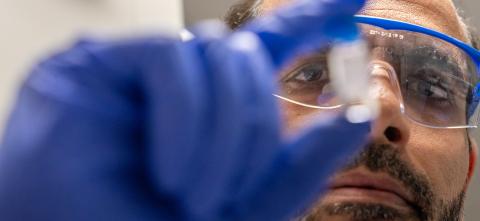
Sweet Targets: The Quest for an Improved Whooping Cough Vaccine
With cases on the rise, researchers are aiming to develop a “one-two punch” vaccine strategy against pertussis, more commonly known as whooping cough. This work could ultimately help reduce transmission of the disease and combat the threat of resistant bacteria mutating into stronger, more lethal “superbugs.”

Scientists Solve Long-Standing Mystery of Amino Acid Transport in Plants
The team’s new study, published in Nature Plants, identifies a class of previously unknown transport proteins called RETICULATA1 (RE1), which enable the exchange of key amino acids within plant cells.
Announcements