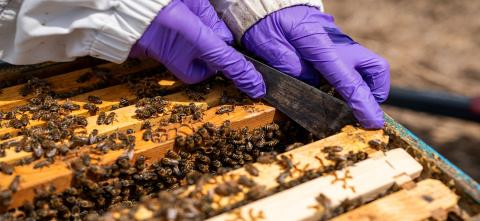
Buzz-Worthy: Spartan Research Saves the Bees
A new $12 million program will tackle nutrient runoff in the Western Lake Erie Basin. Funded by the Michigan Department of Agriculture and Rural Development, the initiative uses a performance-based approach to improve water quality. Partners will work with farmers to target conservation where it delivers the greatest impact.
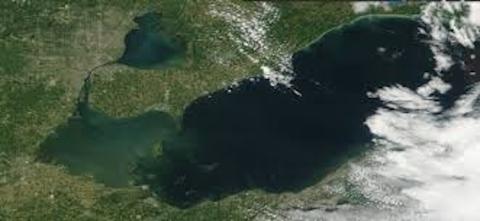
$12M Investment to Advance Performance-Based Conservation in Western Lake Erie Basin
Michigan State University’s Institute of Water Research has recently received a $12 million investment from the Michigan Department of Agriculture and Rural Development (MDARD) to address nutrient contributions to the Western Lake Erie Basin (WLEB) in Michigan.

Graham Receives Grant to Study Absenteeism, Student Well-Being
Assistant Professor Jerome Graham of Michigan State University's College of Education will examine the relationship between chronic absenteeism and student well-being across Georgia with a $450,000 grant.
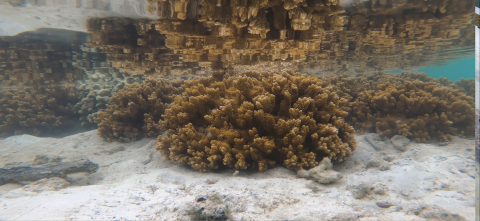
New Study Reveals How Corals Teach Their Offspring to Beat the Heat
Caused by stressful conditions like warming ocean temperatures, coral bleaching is a leading threat to some of our planet’s most diverse and vital ecosystems. Now, a team of researchers has found that some corals survive warming ocean temperatures by passing heat-resisting abilities on to their offspring.

Feeling More Extroverted? Study Finds You May Have Learned How to Handle Daily Stress Better
A new study led by Michigan State University found that as people get better at handling stress on a daily basis, they also become more extroverted, agreeable and open to new experiences over a nearly 20-year period. Likewise, the worse they manage daily stressors, the more introverted, unfriendly and closed off from new experiences they become.

MSU Team Develops Scalable Climate Solutions for Agricultural Carbon Markets
New research from MSU, led by agricultural systems scientist Bruno Basso, tackles a key flaw in agricultural carbon markets: inaccurate “baselines” used to measure climate benefits, which can distort carbon credit calculations and undermine market trust.
Young Athletes Should Take a Cross-Training Vacation for Better Performance, Health
Some professional football players practice ballet. An NCAA champion runner also swims. An Olympic gold medal speed skater does six-hour biking sessions. According to researchers from Michigan State University, these athletes are ahead of the game because cross-training can help prevent injury in youth athletes.
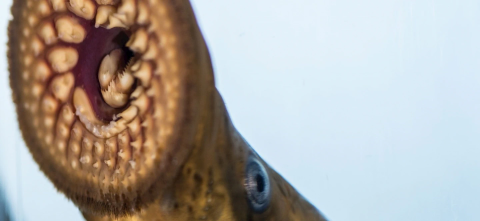
Research Reveals Sea Lamprey Travel Patterns in Great Lakes Waterways
Kandace Griffin, a fisheries and wildlife doctoral student, and Michael Wagner, professor in the MSU Department of Fisheries and Wildlife, found that sea lampreys — a parasitic fish considered an invasive species in the Great Lakes region of the U.S. — follow a clear pattern of staying in the deepest parts of a river.
Announcements